
Last reviewed 6 Oct 2026
An incubator gives a young company a home: space, small amounts of funding, mentors and introductions, usually for one to three years. An accelerator is shorter and more intense: a few months ending in a demo day, often in exchange for equity. Hong Kong has both, run by the science parks, the universities and private firms. When each is taking applications is on the programme deadlines page.
The science parks
HKSTP (Science Park and InnoCentre). The largest programme ladder in Hong Kong. Ideation gives a first grant of up to HK$100,000 for one year; the three-year Incubation Programme adds up to HK$1.29 million, lab and equipment access, an account manager, mentoring and investor matching, with space at Science Park or InnoCentre. It suits R&D-heavy companies: ICT, electronics, green tech, precision engineering, and biotech through its own track. See the funding guide for eligibility.
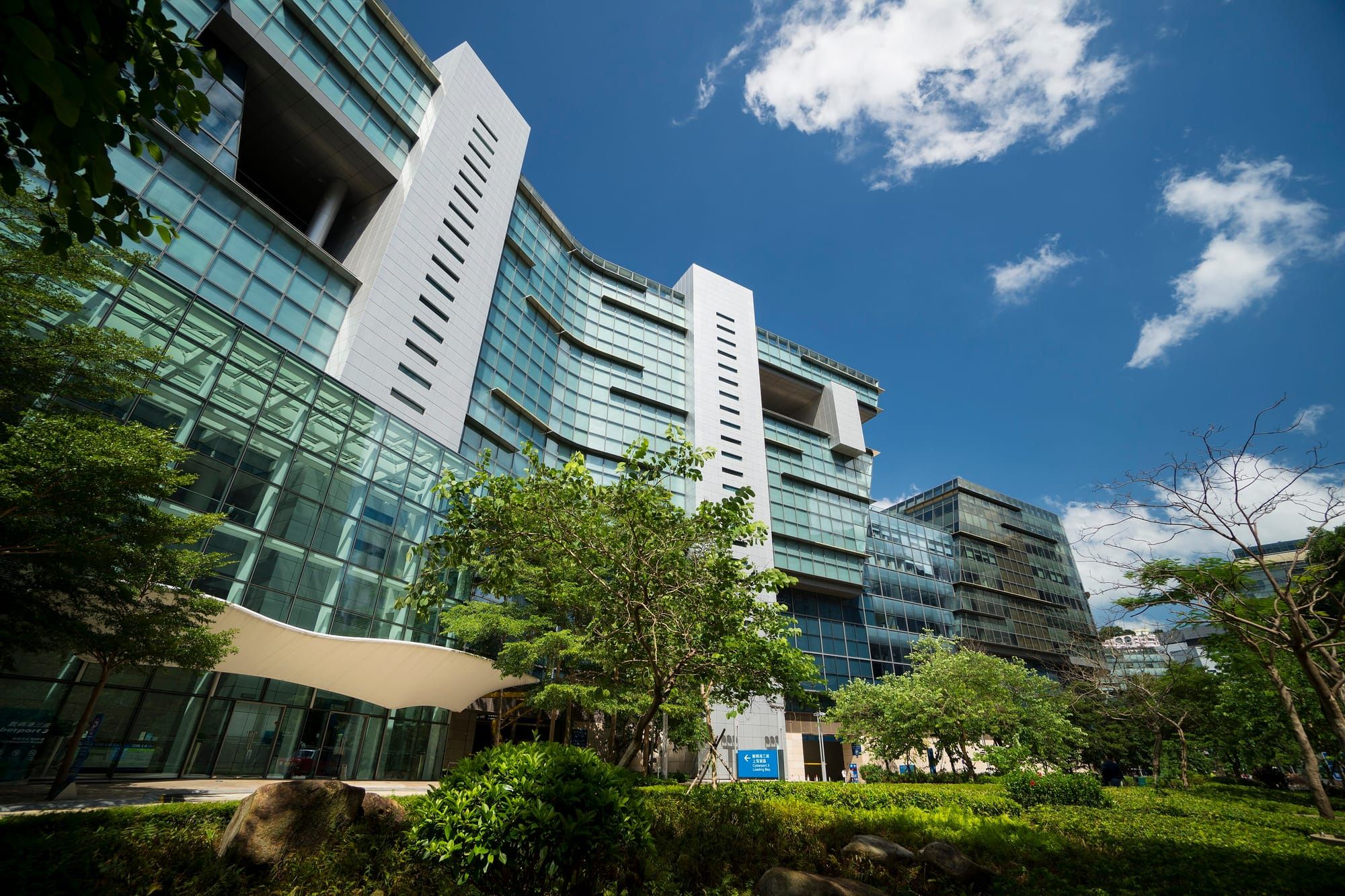
Cyberport. The home of Hong Kong’s digital tech startups, with the Creative Micro Fund for ideas and a 24-month Incubation Programme with funding, rental subsidy and investor networks. Cyberport is especially strong in fintech and Web3, and it runs the Cyberport Macro Fund for later rounds.
University programmes
If you are a student, graduate or staff member, your university is usually the easiest first step: smaller, friendlier, and often a feeder into the science park programmes.
- HKUST Entrepreneurship Center: supports students, alumni and faculty from first ideas to funding.
- HKU iDendron: HKU’s entrepreneurship hub, with spaces on campus, in Wan Chai and in Qianhai.
- CUHK InnoPort: next to University MTR station, with pre-incubation and start-up funding schemes for CUHK innovators.
- PolyU KTEO: turns PolyU research into ventures and supports student and alumni startups.
- CityU HK Tech 300: CityU’s flagship programme since 2021, offering angel investment and investor matching for research-based start-ups.
Most of these also channel the government’s Technology Start-up Support Scheme for Universities (TSSSU).
Private accelerators and studios
Private programmes usually take equity, move faster and bring investor networks. A few listed in InvestHK’s StartmeupHK directory:
- Brinc: venture accelerator connecting founders with investors, corporates and governments.
- Betatron: invests in early-stage, Asia-focused companies and works hands-on with founders.
- Vectr: an early-stage venture studio based in Hong Kong.
- The Mills Fabrica: platform and fund for techstyle and agrifood technology.
The full list, filterable by type and sector, is on the investors page.
How to choose
- Stage. With only an idea, start with Ideation, CCMF or a university scheme. With a prototype and early users, look at the parks’ incubation programmes. Raising a round? Look at accelerators and investors.
- Sector. R&D-heavy hardware, biotech or deep tech fits HKSTP; fintech, Web3 and digital products fit Cyberport.
- Equity. Public programmes mostly give grants; private accelerators usually take equity. Know what you give up.
- Talk to alumni. Every programme lists its companies. Ask two or three founders what they actually got.
- Location matters. Science Park is in Sha Tin and Pak Shek Kok; Cyberport is on the south-west of Hong Kong Island. See them on the map.